When the market turns: how an autonomous bot should behave in a risk-off tape
A calm market and a falling one are different problems. A look at how Soar thinks about caution, protection, and sizing when the tape turns defensive.

The easiest days to run an autonomous bot are the quiet ones. Nothing is on fire, spreads are tight, the tape drifts. The hard days are the ones that tell you what a system is actually made of — the sessions where prices gap, volatility spikes, and every green signal from last week suddenly looks fragile. A risk-off tape is not just a lower version of a calm market. It is a different problem, and it deserves a different posture.
That is the uncomfortable truth about automation: the point of a bot is not to be brave when everyone else is scared. The point is to stay disciplined when it would be very human to panic — or to reach for a hero trade. Restraint is a feature, not a limitation.
A defensive tape is a real input, not background noise
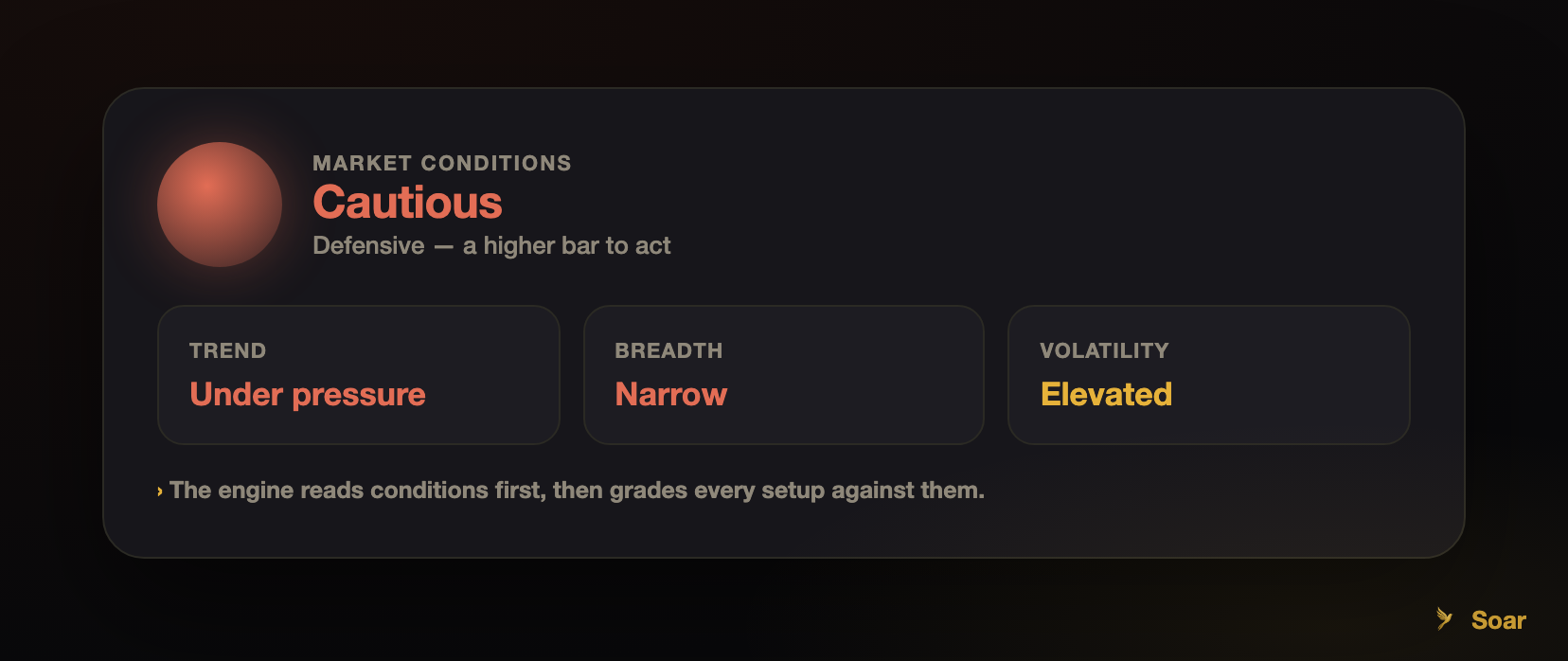
Soar reads broad-market and volatility conditions and factors them into how it grades setups and how it thinks about posture. A single asset can look technically fine in isolation while the overall environment is deteriorating around it. Treating the wider tape as a real input — rather than scoring each ticker in a vacuum — is what separates a considered system from one that just pattern-matches charts.
When the environment turns defensive, the honest response is usually to do less, not more. Fewer new commitments. Tighter scrutiny of anything that survives. A higher bar to act at all. None of that guarantees an outcome — risk of loss is always real — but it reflects a simple idea: the same setup is not equally worth taking in every kind of market.
A bot's job in a downturn is discipline, not heroics. The goal is to behave well, not to be right about the bottom.
Why protective exits matter more when the tape turns
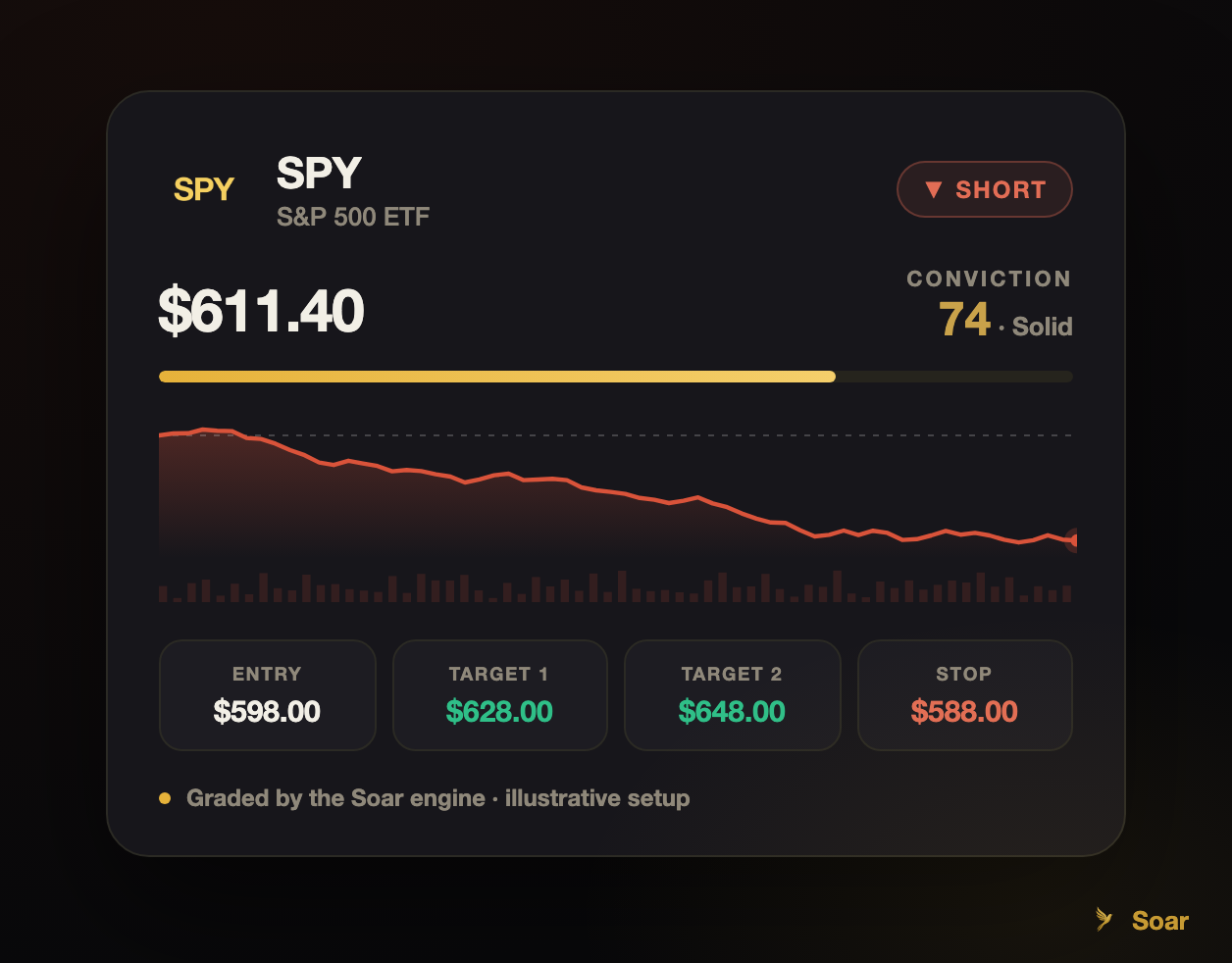
In a calm market, a position has time to breathe. In a falling one, the distance between "a normal pullback" and "a real problem" can close fast. This is exactly when a pre-defined plan for getting out matters most — because deciding on an exit in the middle of a sharp move is the worst time to decide it.
Bots on Soar can use protective exits: levels defined ahead of time so the system acts on a rule rather than an emotion. The value of that is not that it dodges every loss — it doesn't, and no one should claim it does. The value is that the decision was made calmly, in advance, and gets executed the same way whether the tape is quiet or ugly.
Pre-defined, not reactive. A protective exit is a plan set before the stress, not a judgment call made during it.
Consistent. The rule fires the same way at 2pm on a calm day as it does in a fast, gapping tape.
Bounded intent. The purpose is to keep a single position from becoming a disproportionate problem — not to promise it never goes against you.
Sizing is where caution actually lives
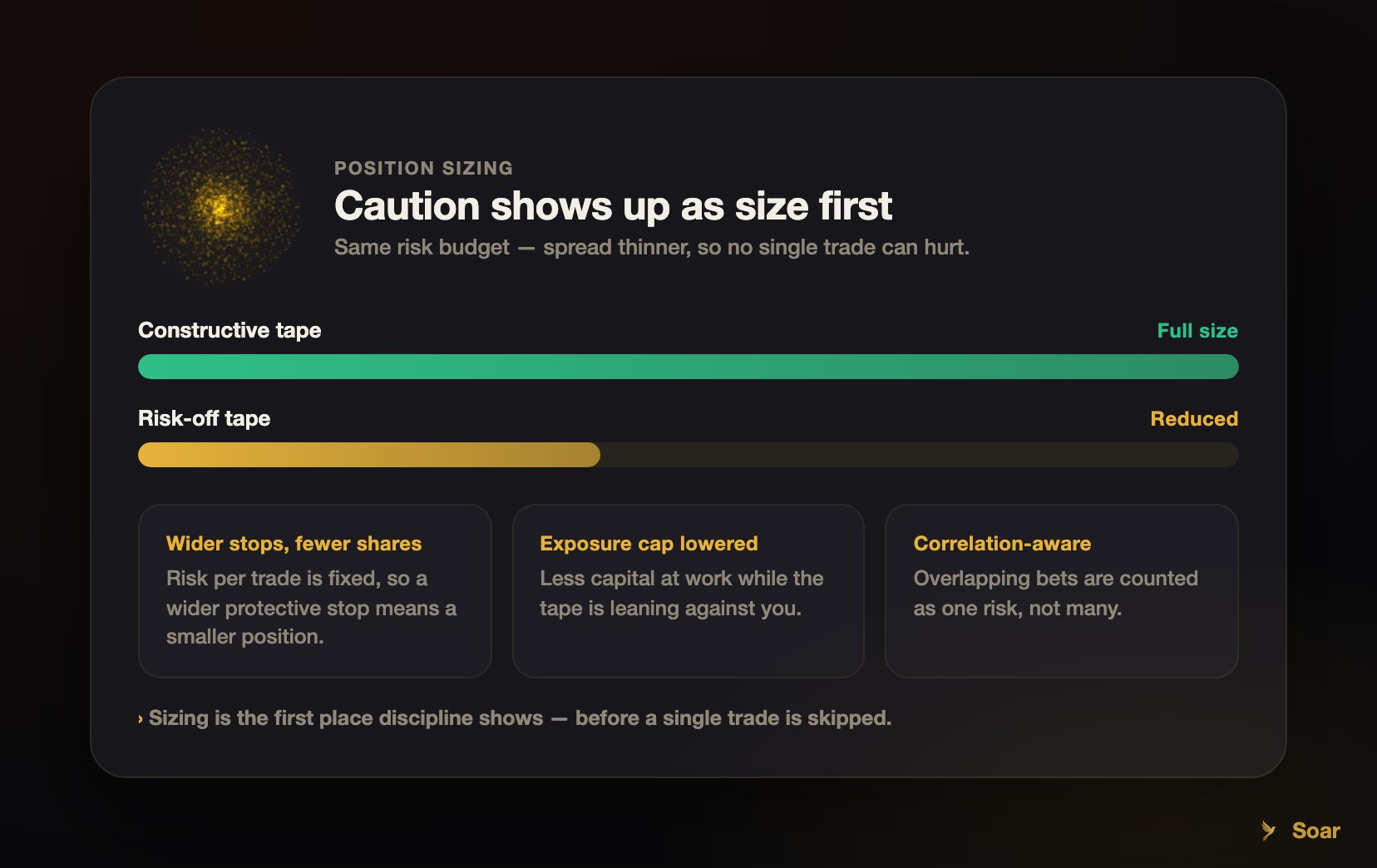
Most people think of "being careful" as picking better trades. In practice, caution shows up first in size. A position sized to your risk profile behaves very differently in a stressed tape than one sized on optimism, and the difference has nothing to do with whether the thesis was smart.
On Soar, bots size to the risk profile you set — not to a fixed dollar amount and not to whatever the last winning streak talked you into. A defensive environment is exactly when that matters. Smaller, deliberate exposure means a single bad session is a setback, not a rupture. That framing keeps the system in the game long enough to keep operating — which is the whole point of automating in the first place.
You can see how different strategies are graded and framed on their own strategy pages, and the daily brief is a good way to keep a read on how the broad environment is shifting from one session to the next.
Autonomy that includes the word "no"
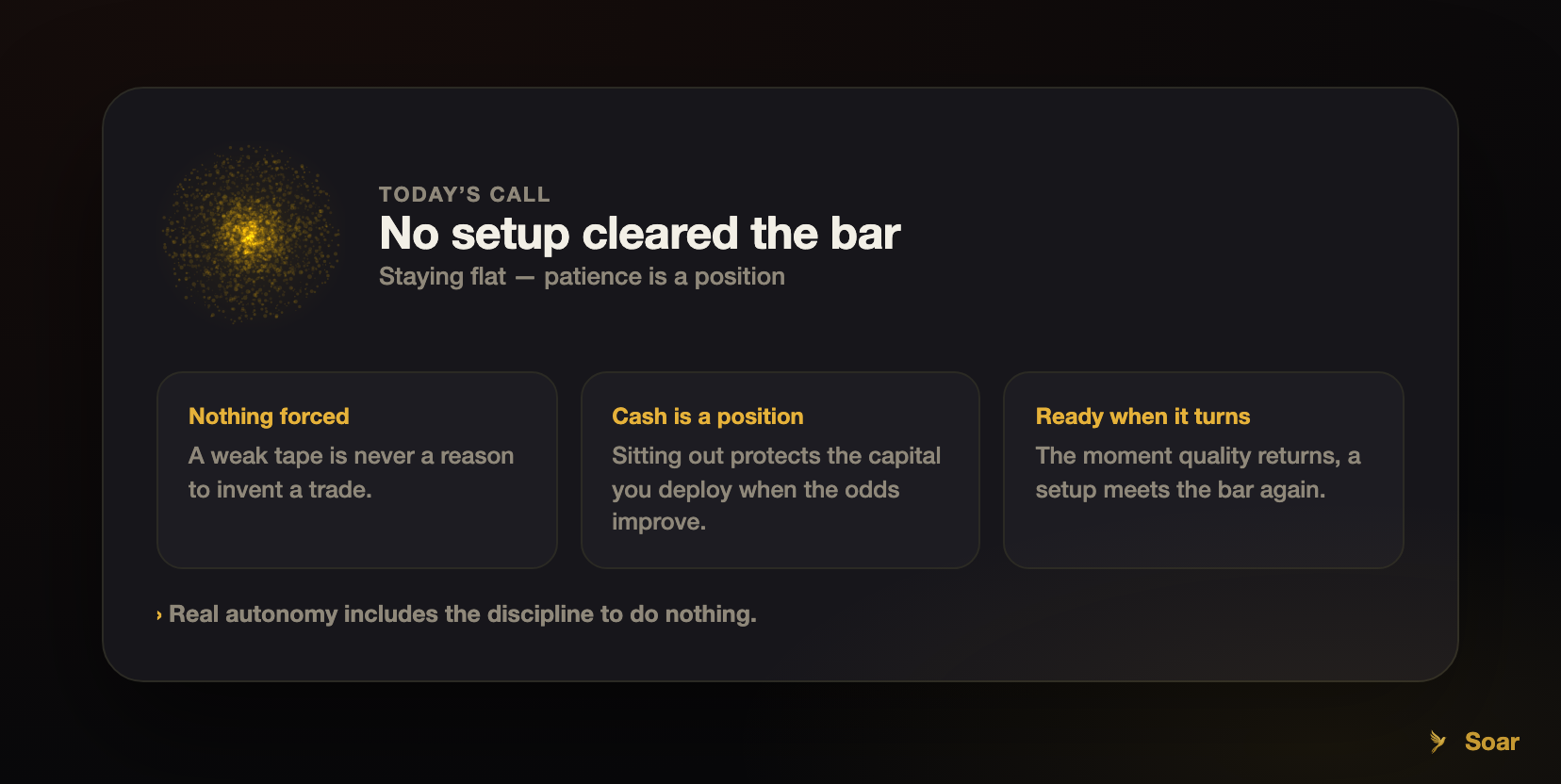
There is a subtle failure mode in automation: a bot that always finds a reason to act. A system that never passes, never sits out, never says "conditions aren't good enough right now" isn't disciplined — it's just busy. Real autonomy has to include restraint, because the ability to decline is part of the judgment you're delegating.
A downturn is the honest test of that. It's easy to build something that trades enthusiastically when everything is up. It's harder — and more valuable — to build something that gets quieter when the tape gets mean, protects what's open, sizes with humility, and waits. Not because caution is a magic shield, but because discipline is the thing you can actually control. Outcomes are never promised; behavior is.
If you want to see how this shows up in practice, you can explore the strategies and how each one is presented at soar.trade, or read more about the approach in the help center and on the blog.
One last note on control, since it matters most when markets are stressed: on Soar, broker access is always trade-only. With self-hosting, your broker API keys live only on your own infrastructure and never touch Soar's servers; with managed hosting, they're stored encrypted and scoped to trade-only with your consent. In every case, Soar can never withdraw or move your funds. Discipline in the engine and control over your own money are two halves of the same idea.
Informational and educational content only. Not investment advice. Trading involves risk, including loss of capital.