
How the Soar engine reads the tape
Markets don't sit still, and neither does the engine. A look at how Soar frames the broad market before it grades a single setup.


Good setups don’t exist in a vacuum. The same chart pattern means one thing in a calm, rising market and something very different when the tape turns defensive. So before Soar grades a single setup, the engine reads the broad market.
Three things the engine looks at
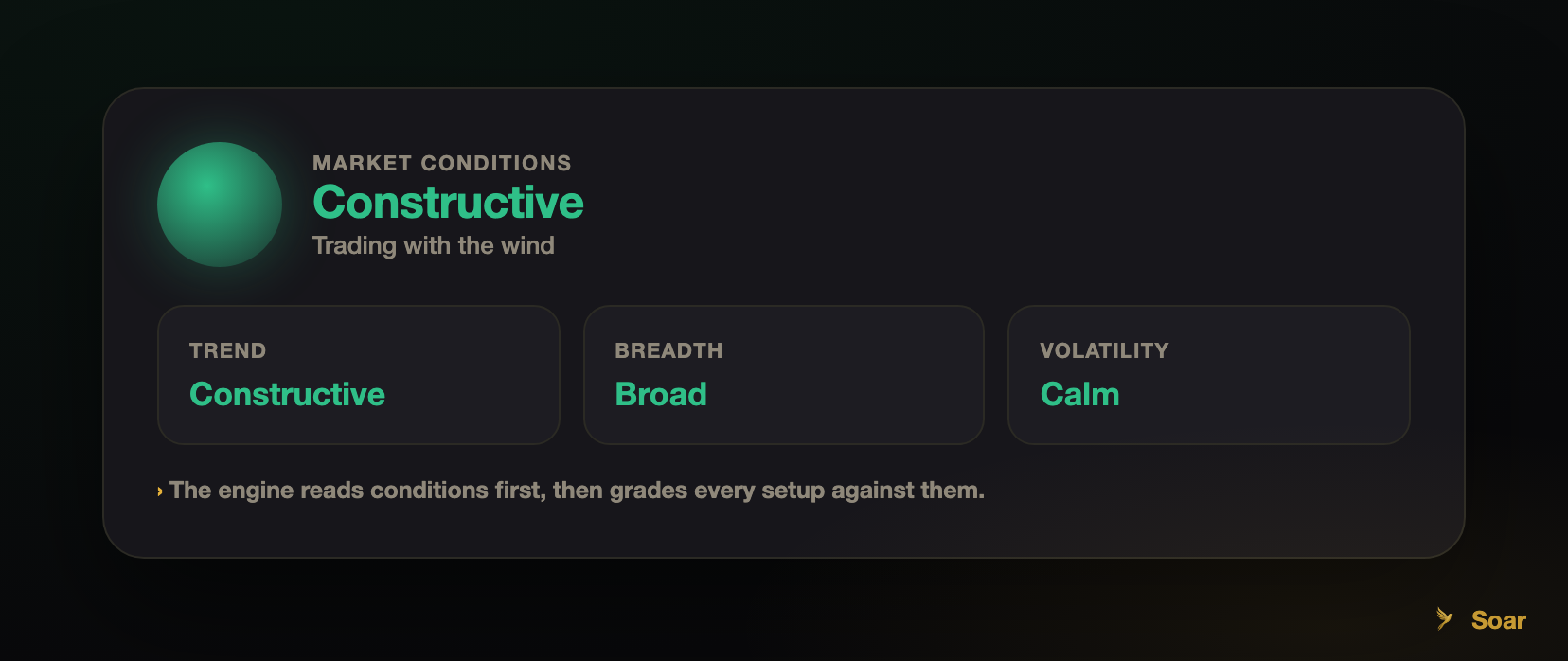
Trend — where the major indexes sit relative to their own recent context: constructive, neutral, or under pressure.
Breadth — how many names are participating, not just the megacaps at the top.
Volatility — whether the market is calm or stressed, which changes how much room a setup needs to work.
Together these form a read on conditions — a regime the engine carries into everything it grades that session.
Why context changes the grade
In a constructive tape, more setups clear the bar. In a defensive one, the engine gets more selective, and a setup needs a stronger structure to survive. It’s the difference between trading with the wind and trading into it. That’s also why Soar’s board can look busy on some days and quiet on others — the engine is responding to conditions, not forcing a fixed number of ideas.
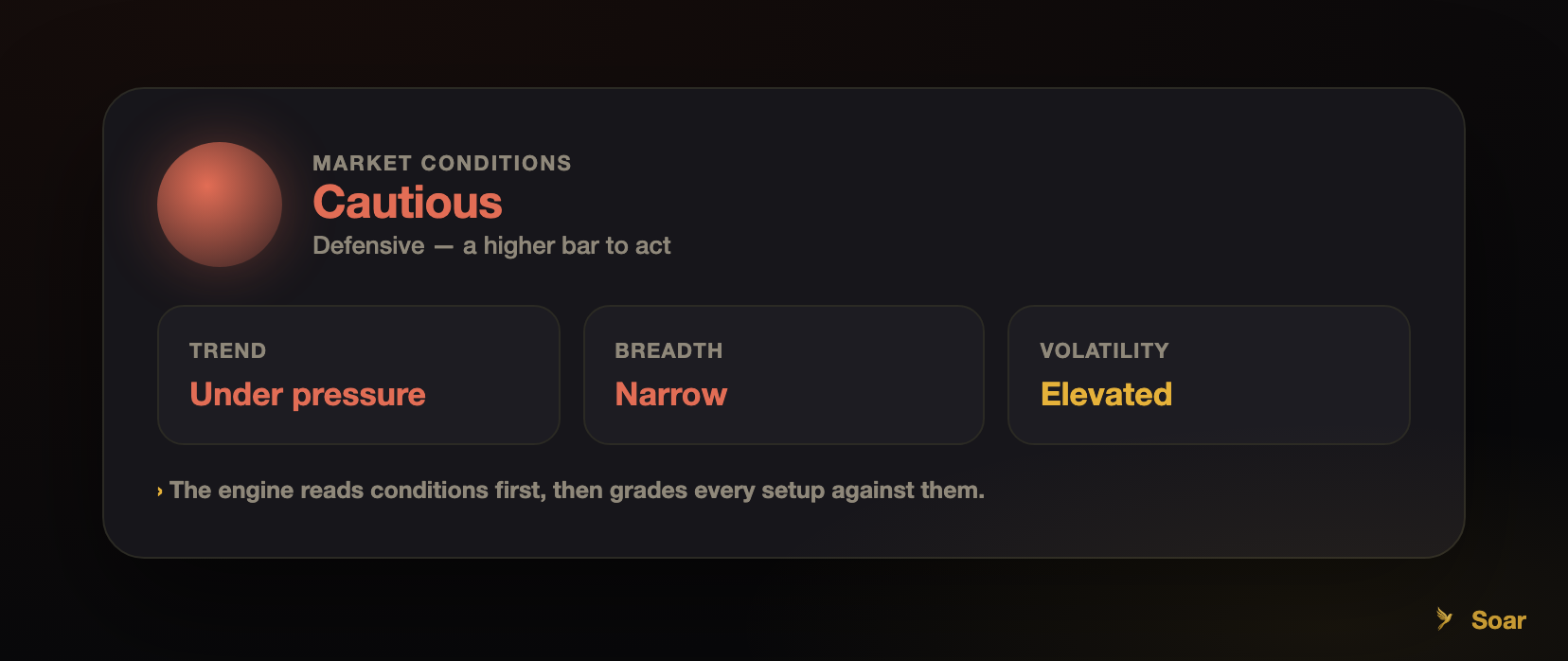
A calm market and a falling one are different problems. The engine treats them that way.
What it means for your bot
A bot deployed to a strategy inherits that discipline: it’s more cautious when the tape is, and it sizes to your risk profile either way. None of this removes risk — it’s about framing conditions honestly, not predicting them. You can see the current read any time on the daily brief.
Informational and educational content only. Not investment advice. Trading involves risk, including loss of capital.